Best Five-Star Suites for Corporate Hosting: The Definitive Guide
Corporate hospitality has shifted from massive convention hosting toward intimate, highly secure environments. Modern enterprise leadership demands physical spaces that transition smoothly between confidential board negotiations and private dining. As global remote models redefine business networks, organizations favor high-end architectural suites functioning as decentralized headquarters.
Executing high-level business engagements requires looking past standard hotel offerings. Planners must evaluate specialized acoustic engineering, secure digital communication networks, and dedicated service infrastructure. Promotional literature highlights opulent interior design and expansive city views, but corporate organizers must scrutinize functional capacities. Facilities must support multi-party negotiations, encrypted data transmission, and rapid catering logistics. Consequently, this analysis explores the dimensions defining elite executive suites.
Securing an exceptional corporate hosting environment balances strict confidentiality against modern executive collaboration. Whether situated in financial capitals or tech hubs, these properties operate under rigorous operational parameters. Understanding these underlying frameworks allows corporate travel managers to optimize capital allocation for high-stakes business functions.
Understanding best five-star suites for corporate hosting
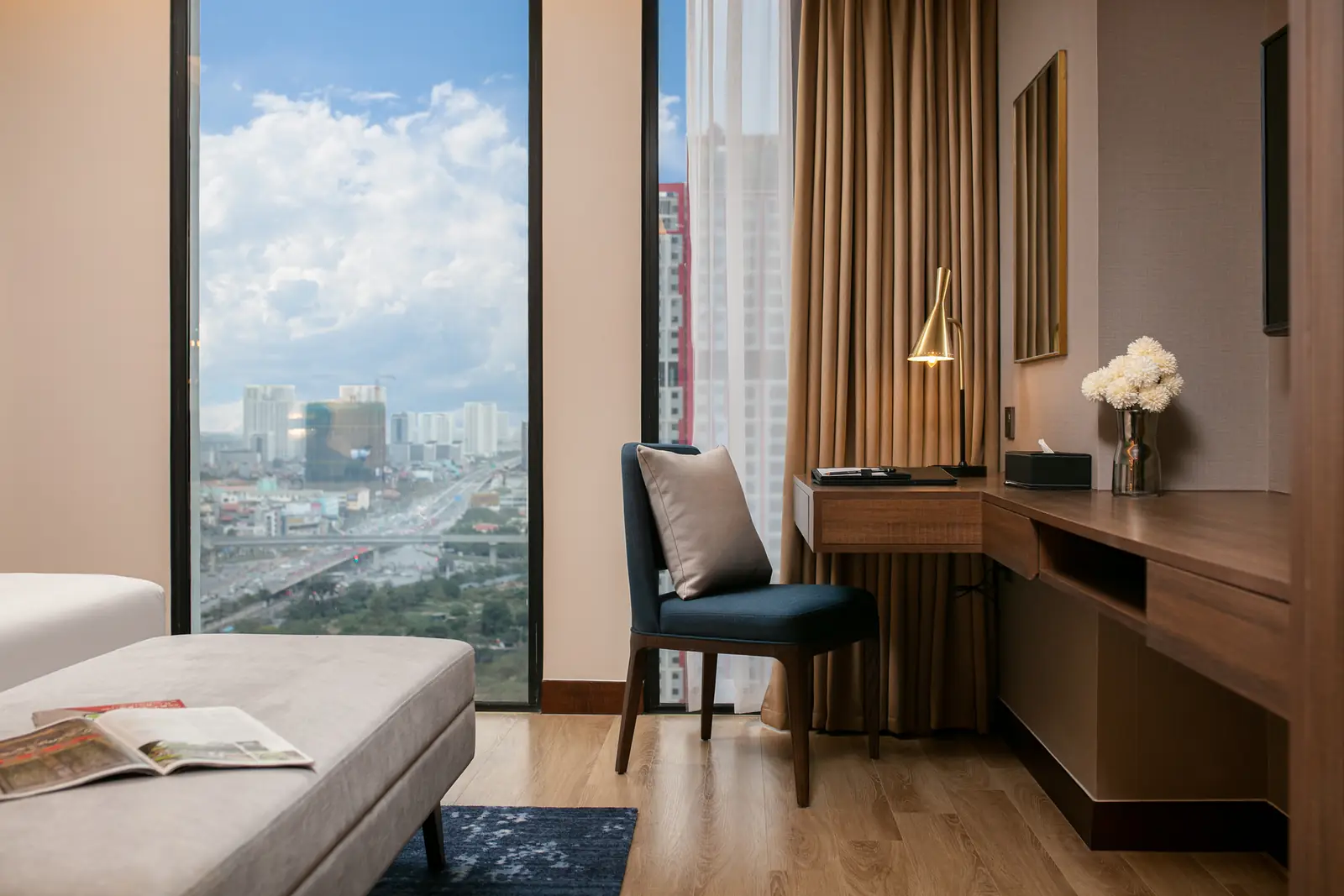
The phrase best five-star suites for corporate hosting represents a demanding synthesis of enterprise architecture, hospitality logistics, and executive security. Evaluating these spaces requires separating superficial luxury markers from functional utility. A sprawling presidential suite with expensive furnishings does not automatically serve as an effective corporate venue. Aesthetic grandeur frequently compromises functional utility if the space lacks integrated presentation technology or sound-attenuated partitions.
Oversimplification often stems from conflating square footage with operational capacity. Properties highlight multi-room layouts, but the true measure of a corporate suite lies in acoustic privacy, robust network infrastructure, and discreet personnel. Successful properties integrate enterprise-grade routers, secure cabling pathways, and isolated entry corridors. These features allow catering staff and security details to operate without disrupting ongoing negotiations.
Another layer of complexity involves corporate compliance and data privacy mandates. Because executive suites host sensitive intellectual property discussions and mergers, physical and digital security are non-negotiable. Prestigious properties maintain specialized secure communication infrastructure and rigorous staff vetting procedures to safeguard corporate assets.
Deep Contextual Background
The evolution of corporate hospitality reflects broader shifts in commerce and communication technology. During the mid-twentieth century, business travel relied on standardized hotel boardrooms rented by the hour. These early spaces prioritized formal Victorian aesthetics, heavy wood-paneled walls, and rudimentary telephone connectivity over technological integration.
As multinational corporations expanded, the demand for flexible environments accommodating mobile executive teams intensified. Hotels responded by introducing multi-room executive suites featuring small dining tables. However, these transitional spaces suffered from acoustic bleed, inadequate power distribution, and rigid catering schedules that failed to match high-stakes deal-making.
In the twenty-first century, premier corporate hosting suites matured into spaces featuring smart-office technology and biophilic acoustic baffling. Properties in financial centers invested in dedicated residential-style wings with private elevators, secure server rooms, and professional presentation displays. Today, elite corporate suites function as autonomous business nodes, combining absolute data security with uncompromising hospitality.
Conceptual Frameworks and Mental Models
Evaluating premier corporate hosting accommodations benefits from structured analytical frameworks isolating functional, security, and logistical variables.
-
The Acoustic Isolation Index evaluates the sound transmission class rating of partition walls and doors, ensuring confidential discussions remain contained within the suite.
-
The Digital Resilience Matrix assesses enterprise network bandwidth, firewall security, and redundant power supplies to prevent communication failures during web-conference negotiations.
-
The Spatial Flow Gradient maps physical transition zones from public entry points to private conference areas, ensuring visiting executives and legal counsel move seamlessly.
-
The Service-to-Guest Operational Ratio measures the availability of dedicated butlers, technicians, and private catering brigades relative to the visiting delegation’s headcount.
Key Categories or Variations
Executive hosting accommodations span several distinct typologies, each presenting trade-offs regarding privacy, technological infrastructure, and accessibility.
| Category | Typical Location Profile | Primary Architectural Advantage | Key Operational Trade-Off |
| Financial District Penthouses | New York, London, Tokyo, Frankfurt | Direct proximity to stock exchanges, banking hubs, and global transit networks. | Elevated street-level congestion and potential exposure to urban noise pollution. |
| Silicon Innovation Villas | Silicon Valley, Austin, Seattle | Expansive collaborative spaces, cutting-edge AV integration, and informal outdoor lounges. | Greater physical distance from traditional financial and legal institutional centers. |
| Diplomatic Urban Mansions | Washington D.C., Geneva, Paris | Heightened perimeter security, private gated entrances, and formal diplomatic salons. | Highly restrictive zoning laws and rigid historic preservation architectural constraints. |
| Resort Executive Compounds | Maui, Scottsdale, Lake Como | Exceptional privacy for off-site strategic planning and executive team bonding. | Logistical challenges in sourcing specialized technical support staff on short notice. |
| Historic Heritage Suites | Boston, Edinburgh, Vienna | Prestigious architectural pedigree and formal dining rooms suited for gala hosting. | Older spatial layouts that may restrict modern cable routing and smart-office retrofitting. |
Realistic Decision Logic
Selecting categories requires aligning the specific objective of the business engagement with property strengths. Organizations conducting fast-paced financial transactions favor financial district penthouses for immediate advisory access. Leadership teams focusing on long-term strategic roadmaps lean toward resort executive compounds. Diplomatic urban mansions serve entities requiring rigorous perimeter security and formal protocol compliance.
Detailed Real-World Scenarios
Understanding how high-end corporate hosting suites function under operational pressure requires examining situational archetypes that test suite design and staff capability.
The Cross-Border Mergers and Acquisitions Negotiation
-
Operational Constraints: A multi-day negotiation involving two legal teams, investment bankers, and executive leadership requiring continuous document review and confidentiality.
-
Core Decision Points: Selecting a penthouse featuring a dedicated board table seating twelve, secure fiber-optic connections, and a secure document storage room.
-
Primary Failure Modes: Inadequate electrical outlets near seating areas; weak Wi-Fi signals dropping secure VPN connections; acoustic leakage through interior doors.
-
Second-Order Effects: Choosing a properly equipped suite prevents data breaches, maintains negotiation momentum, and protects sensitive market disclosures.
The Confidential Board Governance and Audit Review
-
Operational Constraints: An annual review session where board directors evaluate sensitive financial audits and internal compliance reports under regulatory oversight.
-
Core Decision Points: Evaluating suites with private elevator access, secure window shading systems preventing visual surveillance, and sound-masked conference alcoves.
-
Primary Failure Modes: Public elevator banks passing directly through the suite foyer; lack of private breakout rooms for independent director caucuses.
-
Second-Order Effects: Securing an isolated hosting environment ensures compliance with fiduciary standards and shields board members from external distractions.
The C-Suite Executive Recruitment and Assessment
-
Operational Constraints: Hosting high-profile executive candidates for multi-stage interviews, psychological assessments, and informal partner dinners over a weekend.
-
Core Decision Points: Assessing the balance between formal interview boardrooms and luxurious residential-style living quarters conveying company culture.
-
Failure Modes: Overly sterile office environments failing to impress candidates; lack of private dining facilities for confidential evaluations.
-
Second-Order Effects: Properties offering professional meeting infrastructure and high-end residential comfort significantly enhance candidate conversion rates.
The Global Client Advisory Board Summit
-
Operational Constraints: Gathering key enterprise clients for strategic feedback sessions, product roadmap previews, and celebratory gala dinners within a single footprint.
-
Core Decision Points: Selecting multi-level compound suites with expansive reception terraces, modular seating configurations, and dedicated executive culinary teams.
-
Primary Failure Modes: Insufficient restroom facilities for larger visiting groups; kitchen bottlenecks delaying multi-course executive dinners.
-
Second-Order Effects: Utilizing suites designed for scalable hosting ensures client delegations receive flawless hospitality without spatial crowding.
Planning, Cost, and Resource Dynamics
Securing premier corporate hosting accommodations involves complex financial structures extending beyond standard room rates. Total costs account for extended booking holds, mandatory security detailing, customized AV equipment rentals, and specialized catering overheads. Furthermore, corporate booking channels frequently require master service agreements to streamline billing.
| Expense Category | Average Baseline Range | Primary Cost Drivers & Variability |
| Nightly Executive Suite Tariff | $3,500 to $15,000+ per night | Geographic market tier; square footage; inclusion of private security elevators and boardrooms. |
| Integrated AV & Tech Rentals | $1,000 to $5,000+ per day | Secure video conferencing hardware, translation booth installation, and dedicated on-site IT technicians. |
| Executive Catering & Beverage | $500 to $2,500+ per attendee/day | Continuous coffee breaks, private chef-prepared working lunches, and formal gala wine pairings. |
| Security & Privacy Overheads | $1,500 to $6,000+ per day | Private security detail staging rooms, baggage screening equipment, and counter-surveillance sweeps. |
Opportunity Cost and Financial Nuance
The primary financial consideration in corporate hosting involves the opportunity cost of a failed negotiation or compromised data security resulting from poor venue selection. While premium executive suites carry substantial daily tariffs, the cost is negligible compared to the stakes of major enterprise transactions. Corporate travel planners must evaluate these expenditures as strategic investments in operational security rather than standard travel expenses.
Tools, Strategies, and Support Systems
Navigating the inventory of elite corporate hosting suites requires systematic research tools and specialized corporate advisory partnerships.
-
Dedicated Corporate Travel Desks with luxury portfolios provide priority allocation, negotiated master billing terms, and rapid contract execution.
-
Architectural Floor-Plan Reviewers help corporate facilities teams examine suite schematics to verify sightlines, acoustic barriers, and cable management pathways.
-
Secure Communications Auditing Tools assess wireless network encryption, firewall strength, and physical port security before executive teams arrive.
-
Direct Property Event Operations Engagement establishes communication with head concierges and banquet directors weeks prior to coordinate security and catering requirements.
-
Spatial Capacity and Flow Modeling analyzes suite layouts to determine optimal seating arrangements for presentations, breakout sessions, and formal dining.
-
Independent Security Consultancies review property perimeters, elevator security, and access control protocols to ensure compliance with enterprise duty-of-care policies.
Risk Landscape and Failure Modes
Even celebrated luxury properties remain vulnerable to systemic operational failures and security breaches during corporate hosting engagements.
-
Digital Security Compromise: Unencrypted hotel networks or shared routers can expose sensitive corporate data packets to interception by malicious actors.
-
Acoustic and Spatial Eavesdropping: Poorly insulated partition walls or hollow-core doors can allow confidential discussions to be overheard from adjacent public corridors.
-
Logistical and Catering Bottlenecks: Inflexible hotel kitchen schedules can disrupt tight meeting timelines, causing delays during working lunches or executive dinners.
-
Power and Infrastructure Failure: Sudden local power grid disruptions can crash video conferencing systems and plunge boardrooms into darkness unless backed by uninterruptible power supplies.
Governance, Maintenance, and Long-Term Adaptation
Maintaining elite standards across corporate hosting assets requires rigorous operational governance and continuous technological upgrades. Because enterprise technology evolves rapidly, property management must adhere to strict hardware refresh cycles. Environmental exposure monitoring feeds into preventative audio-visual recalibration, followed by interior soft-goods upgrades on an 18-to-24-month cadence, backed by cybersecurity audits.
This cyclical governance model ensures that high-traffic executive boardrooms and private reception salons undergo deep restorative maintenance rather than superficial cosmetic touch-ups. Regular reviews of life-safety systems, secure access control panels, and emergency power redundancy prevent operational emergencies from impacting critical business transactions.
Measurement, Tracking, and Evaluation
Assessing the ongoing efficacy of a corporate hosting venue involves monitoring objective operational metrics and subjective executive feedback.
-
Leading Indicators: Pre-arrival preference confirmation rates, IT infrastructure stress-test success percentages, and maintenance ticket resolution velocity.
-
Lagging Indicators: Post-event executive satisfaction scores, repeat corporate booking rates, and net promoter sentiment regarding acoustic privacy and service execution.
-
Qualitative Signals: The seamlessness of multi-departmental coordination, the discretion of service personnel, and the overall psychological comfort reported by visiting leadership teams.
Common Misconceptions and Oversimplifications
-
Myth: Any high-end hotel presidential suite is inherently suitable for confidential board meetings.
Correction: Many luxury suites prioritize romantic aesthetics or social entertaining over functional acoustics, secure network infrastructure, and professional presentation lighting.
-
Myth: Standard hotel business centers can substitute for a fully equipped executive hosting suite.
Correction: Public business centers lack privacy, expose sensitive documents to foot traffic, and fail to provide the controlled environment required for high-stakes negotiations.
-
Myth: Corporate hosting costs are strictly limited to nightly room rates and basic catering fees.
Correction: Comprehensive hosting budgets must account for specialized AV technical support, secure network configurations, and potential after-hours security staffing.
-
Myth: Luxury properties automatically maintain robust cybersecurity protocols for corporate tenants.
Correction: Standard hospitality networks are often designed for leisure travelers and require dedicated virtual private networks or isolated VLAN setups for secure corporate use.
Conclusion
The selection of premier corporate hosting accommodations requires navigating a complex intersection of enterprise architecture, digital security, and flawless hospitality execution. True effectiveness in this domain is defined by meticulous attention to acoustic isolation, network integrity, and spatial versatility. By looking past surface-level marketing and evaluating properties through rigorous structural frameworks, enterprise leadership teams can identify authentic environments protecting proprietary interests while fostering successful business outcomes.