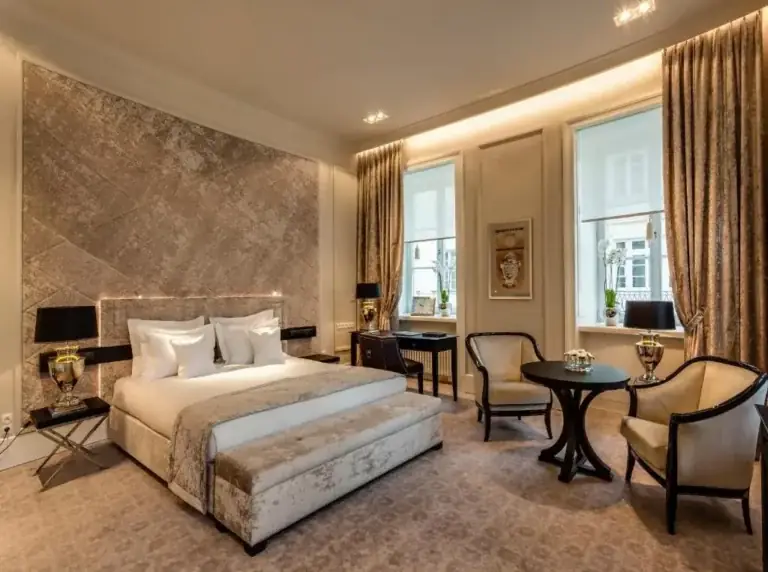
Best Five-Star Suites for Executive Travel: The Definitive Guide
The convergence of modern enterprise mobility and high-end real estate has fundamentally altered how corporate leaders, family offices, and traveling principals manage temporary operational bases. Moving beyond standard leisure accommodations, modern business travel at the highest tier requires a sophisticated alignment of private infrastructure, secure communication channels, and uninterrupted spatial functionality. Flagship properties in major global and domestic financial centers no longer compete purely on decorative extravagance; instead, they function as secure multi-room command centers engineered to support high-stakes negotiations, confidential board retreats, and complex remote management operations.
Navigating this specialized segment requires a rigorous examination of how architectural design, network security, and personalized hospitality intersect. As corporate travel policies demand greater accountability, absolute discretion, and seamless digital integration, the criteria for selecting elite temporary quarters have grown increasingly granular. Dissecting these operational mechanics provides a clear window into the structural realities governing premier corporate accommodations worldwide.
Understanding “best five-star suites for executive travel”

The analytical discipline required to evaluate the best five-star suites for executive travel encompasses the technological, spatial, and security criteria that elevate a property far above standard corporate lodging. Unlike traditional hotel rooms or basic junior suites, flagship accommodations—such as multi-room corner penthouses in Manhattan, Chicago, or San Francisco—operate as self-contained executive hubs. They are engineered to provide acoustic isolation, dedicated meeting boardrooms, encrypted local area networks, and round-the-clock administrative support tailored to the principal’s exact schedule.
Common misunderstandings center on the assumption that a suite’s executive readiness is guaranteed by brand prestige or general star ratings. In reality, physical wear, outdated digital infrastructure, and poor sound attenuation can severely compromise a principal’s ability to conduct confidential communications or host sensitive client briefings. Furthermore, observers frequently confuse decorative luxury with operational utility, overlooking critical deficits in power redundancy, lighting controls for video conferences, or secure document destruction facilities.
Oversimplification risks emerge when corporate travel planners rely strictly on promotional imagery or square footage metrics to judge executive suitability. High-end business lodging requires deep contextual scrutiny regarding private elevator banks, uncompromised Wi-Fi VLAN setups, and the discretion of dedicated butler teams. True appreciation of these environments demands a multi-dimensional evaluation of both hardware reliability and invisible service execution.
Deep Contextual Background
The evolution of executive-focused luxury lodging reflects a century-long shift from traditional grand hotels designed for leisurely aristocracy to high-tech operational bases built for mobile corporate titans. During the early twentieth century, premier city-center hotels offered expansive suites characterized by heavy drapery, mahogany writing desks, and private dining rooms intended for social entertaining rather than high-frequency digital commerce.
As post-war global finance and telecommunications expanded, urban properties began integrating dedicated business centers, multi-line telephone exchanges, and early computer network connections. However, these facilities remained largely communal or auxiliary to the room itself, forcing traveling executives to separate their living quarters from their working environments.
The contemporary era represents an absolute synthesis of residential comfort and enterprise-grade infrastructure. Modern executive suites are engineered to serve as secure remote offices, media broadcast studios, and private conference venues simultaneously. This systemic shift ensures that premier properties continually redefine the boundaries of spatial efficiency, cybersecurity, and professional capability.
Conceptual Frameworks and Mental Models
Assessing the elite tiers of business lodging requires structured analytical frameworks that weigh multiple competing operational variables.
The Acoustic-Visual Isolation Matrix
This framework maps a suite’s layout to ensure absolute privacy for confidential voice calls and video conferences, shielding interior discussions from ambient hallway noise and visual tracking.
The Enterprise Connectivity Index
This analytical lens evaluates the redundancy, speed, and security of the suite’s digital infrastructure, including isolated VLANs and encrypted hardwired ethernet ports.
The Spatial-Workflow Efficiency Model
This model weighs raw square footage against functional usability, assessing the transition zones between formal boardrooms, private sleeping quarters, and dining spaces.
The Service-Discretion Continuum
This framework tracks how effectively dedicated staff manage room turnover, catering delivery, and security details without disrupting the principal’s working cadence.
Key Categories or Variations
The landscape of premier business lodging encompasses several distinct architectural and functional categories, each presenting unique experiential trade-offs.
The Metropolitan Financial Tower Penthouse
Soaring above primary global banking districts, these vertical suites feature floor-to-ceiling acoustic glass, private elevator access, and integrated boardroom facilities. It offers immediate proximity to corporate headquarters, offset by urban ambient light and vertical transit delays.
The Historic Landmark Executive Suite
Embedded within restored architectural icons in core commercial districts, these accommodations blend classic millwork with state-of-the-art smart-room automation. It delivers profound cultural prestige, offset by legacy structural layouts that can constrain large support entourages.
The Silicon Valley Tech-Integrated Compound
Located near major innovation corridors, these modern suites emphasize modular workspaces, ultra-fast redundant fiber-optic connectivity, and broadcast-quality media rooms. It ensures supreme technological readiness, offset by minimalist aesthetic designs that lack classic warmth.
The Diplomatic Mission Residential Suite
Engineered for international delegations and executive leadership teams, these expansive multi-room compounds feature reinforced security perimeters and separate staff quarters. It guarantees maximum physical security, offset by rigorous vetting protocols and limited availability.
The Boutique Design Loft Suite
Situated in revitalized urban arts districts, these open-plan accommodations provide creative spatial layouts and bespoke artistic styling. It presents an inspiring atmosphere for creative directors, offset by reduced acoustic separation between work and rest areas.
The Airport-Adjacent Flagship Terminus
Positioned directly connected to major international private aviation hubs, these suites offer ultra-fast tarmac transfers and streamlined customs staging. It maximizes travel efficiency for high-frequency flyers, offset by localized aviation noise exposure.
Executive Suite Category Comparison Matrix
| Suite Category | Primary Architectural Focus | Core Experiential Advantage | Primary Operational Trade-Off |
| Metropolitan Financial Penthouse | Vertical commercial dominance | Direct proximity to major financial hubs | Urban ambient noise and light bleed |
| Historic Landmark Suite | Restored heritage architecture | Timeless prestige and classic millwork | Fixed structural floor plan limits |
| Tech-Integrated Compound | Modular workspace and fiber optics | Broadcast-grade media and fast data | Minimalist styling lacking warmth |
| Diplomatic Mission Suite | Reinforced security and scale | Absolute privacy and dual-entry control | Highly restricted availability |
| Boutique Design Loft | Open-plan creative layout | Inspiring aesthetic for creative work | Reduced acoustic separation zones |
| Airport-Adjacent Terminus | Direct private aviation access | Tarmac transfer speed and efficiency | Proximity to active runway noise |
Realistic Decision Logic
Selecting the appropriate executive suite requires aligning the traveler’s immediate professional agenda with the property’s micro-location and infrastructural capabilities. Specifically, if a principal is orchestrating a high-frequency sequence of face-to-face banking negotiations, boutique lofts and airport-adjacent termini must be disqualified in favor of vertical financial district penthouses with secure transport staging. Conversely, for an intensive media production or remote software deployment sprint, traditional historic suites must be bypassed in favor of tech-integrated compounds featuring robust fiber connectivity. Planners must evaluate assets using a strict situational exclusion matrix before confirming multi-night bookings.
Detailed Real-World Scenarios
The Cross-Border Acquisition War Room
A multinational corporate development team managing a complex cross-border acquisition required a secure multi-room environment to host continuous financial audits and legal briefings. By contracting a flagship financial district penthouse featuring an integrated boardroom, isolated ethernet wiring, and secure document shredding services, the team completed the transaction without a single data leak or spatial bottleneck.
The Venture Capital Portfolio Review
A senior venture partner orchestrating an annual portfolio review with dozens of startup founders utilized a tech-integrated western metropolitan suite. The accommodation’s modular conference setup, high-capacity presentation screens, and dedicated catering staging area allowed the firm to conduct seamless back-to-back pitch sessions in absolute privacy.
The Executive Crisis Management Staging
An enterprise leadership team responding to an unexpected cyber incident utilized an airport-adjacent flagship terminus suite to maintain continuous global communication lines. The suite’s redundant satellite internet backups, secure phone lines, and round-the-clock room service provisions ensured executive focus remained entirely on crisis mitigation.
The Legal Arbitration and Settlement Hub
A prominent litigation team managing a high-stakes corporate settlement required an isolated environment for multi-party mediation sessions. Selecting a historic landmark suite with dual-entry access points permitted opposing legal teams and arbitrators to enter and exit separate chambers without cross-contamination or media exposure.
Planning, Cost, and Resource Dynamics
The financial architecture of securing premier executive accommodations involves complex direct and indirect cost trade-offs. Direct nightly tariffs for top-tier business suites routinely range from several thousand to tens of thousands of dollars, driven by integrated boardroom square footage, dedicated butler support, and specialized technological infrastructure.
Opportunity costs manifest clearly in booking lead times and spatial availability. Because top-tier executive inventory is severely restricted—often limited to a single flagship penthouse per property—securing peak commercial conference dates requires advance coordination and substantial corporate deposit commitments.
| Expense Category | Typical Variance Range | Primary Cost Drivers | Mitigation Strategy |
| Base Suite Tariffs | $4,000 to $25,000+ per night | Square footage; boardroom inclusion | Leverage corporate preferred rates |
| Dedicated IT Infrastructure | $500 to $2,500+ per engagement | VLAN setup; redundant lines | Bundle network fees into master agreement |
| Catering & Beverage Surcharges | 25% to 50% of folio base | Private dining; boardroom service | Establish fixed daily food and beverage caps |
| Cancellation Forfeiture | 50% to 100% of contract | Strict attrition windows; peak seasons | Secure flexible corporate cancellation riders |
Tools, Strategies, and Support Systems
Evaluating and securing the highest tier of business lodging requires specialized digital tools and professional support networks.
-
Corporate Travel Management Consortia Portals: Utilizing invitation-only booking platforms that grant priority access to unlisted executive inventory and guaranteed late check-outs.
-
Encrypted Communication Channels: Maintaining direct messaging lines with property general managers to pre-configure security and IT requirements.
-
Global Network Security Auditing Apps: Employing portable diagnostic tools to verify Wi-Fi encryption strength and firewall stability upon arrival.
-
Digital Concierge Integration Software: Utilizing property applications to coordinate real-time printing, courier services, and vehicle dispatches.
-
Secure Document Management Vaults: Staging non-disclosure agreements and corporate compliance paperwork for rapid execution.
-
Post-Stay Expense Reconciliation Systems: Cross-referencing daily folio charges against corporate travel policy thresholds to ensure absolute financial accuracy.
Risk Landscape and Failure Modes
Reserving and occupying elite business inventory exposes corporate travelers to compounding operational risk cascades. The primary vulnerability lies in network security breaches. Standard hotel Wi-Fi networks, even when password-protected, can expose sensitive corporate data to interception if isolated VLANs or secure VPN protocols are not explicitly established prior to arrival.
Another critical risk category involves acoustic and physical privacy failures. Suites with poorly sealed partition doors or adjacent maintenance access points can compromise confidential discussions, leading to severe legal and financial liabilities for corporate principals.
Governance, Maintenance, and Long-Term Adaptation
Maintaining an authoritative understanding of premier business lodging assets requires continuous market surveillance and structured review cadences. As properties undergo periodic technological upgrades, their actual digital infrastructure and security protocols change frequently.
-
Adjustment Triggers: Define explicit qualitative signals—such as persistent network latency issues or management turnover—that automatically prompt the removal of a property from corporate preferred lists.
-
Annual Infrastructure Audits: Conduct comprehensive technical reviews of preferred hotel suites to verify ongoing compatibility with enterprise security standards.
-
Layered Compliance Checklists: Maintain internal databases tracking the evolving digital bandwidth, power redundancy, and physical security features of target suites across major global business hubs.
Measurement, Tracking, and Evaluation
Assessing the true efficacy of business lodging investments requires balancing quantitative productivity metrics with qualitative executive feedback. Relying exclusively on invoice totals hides operational shortcomings in service execution.
-
Leading Indicators: Monitor pre-arrival IT configuration responsiveness, boardroom readiness velocity, and travel agency communication efficiency.
-
Lagging Indicators: Analyze project completion success rates, billing accuracy percentages, and total unmitigated service complaint logs.
-
Qualitative Signals: Evaluate executive feedback concerning absolute acoustic privacy, workspace ergonomic comfort, and the seamlessness of dedicated support execution.
Common Misconceptions and Oversimplifications
-
Myth: Any five-star hotel room with a desk qualifies as a suitable environment for executive travel.
-
Correction: Standard luxury rooms lack the multi-room separation, secure networking, and formal boardroom seating required for high-level corporate operations.
-
-
Myth: Hotel Wi-Fi networks in luxury properties are inherently secure enough for confidential financial data transfers.
-
Correction: Public-facing hospitality networks require explicit IT configuration, dedicated VLAN isolation, or private mobile hot-spot deployment to ensure enterprise security.
-
-
Myth: Booking through public consumer travel sites offers the same corporate flexibility as direct account management.
-
Correction: Consumer booking platforms lack the direct lines of communication necessary to enforce custom IT, security, and boardroom staging requests.
-
-
Myth: Executive suites come equipped with secure document destruction and printing facilities by default.
-
Correction: Confidential document handling and high-capacity secure printing require explicit pre-arrival coordination with hotel business center management.
-
-
Myth: Peak business travel seasons only affect standard guest rooms, leaving flagship suites readily available.
-
Correction: Top-tier executive inventory is exceptionally scarce and subject to intense competition during major global financial summits and industry conferences.
-
Ethical, Practical, or Contextual Considerations
Contracting and occupying extended executive hospitality packages carries significant responsibilities regarding corporate governance, labor equity, and environmental resource consumption. The intensive staffing models required to support round-the-clock room service, IT assistance, and administrative support place substantial demands on hospitality personnel.
Corporate travel planners must prioritize properties that demonstrate verifiable commitments to fair labor practices, secure data privacy compliance, and sustainable building operations. Supporting luxury assets that balance uncompromising professional utility with genuine ethical stewardship ensures that executive travel fosters responsible industry advancement.
Conclusion
Mastering the evaluation of elite business lodging assets requires intellectual rigor, strict technological oversight, and a commitment to looking past surface-level marketing claims. While top-tier executive accommodations demand extraordinary financial investment, understanding the intricate interplay of digital infrastructure, acoustic isolation, and spatial utility transforms travel planning into a highly strategic corporate advantage. By balancing thorough due diligence with an appreciation for genuine operational excellence, organizations can successfully navigate the upper echelons of professional mobility.