American Urban Retreat Destinations USA: The Definitive Guide
The modern landscape of metropolitan travel has shifted from high-density sightseeing toward deliberate interior sanctuary preservation. When corporate leaders and remote principals seek restorative isolation inside major metropolitan centers, they navigate dense urban environments characterized by sensory overload. This paradox has elevated the market demand for american urban retreat destinations usa, where historical architecture and acoustic isolation merge with elite wellness infrastructure.
Securing these metropolitan sanctuaries involves managing municipal zoning laws, specialized booking networks, and urban soundproofing engineering. Unlike sprawling wilderness lodges, these downtown retreats operate within high-cost real estate ecosystems that require institutional procurement strategies. Consequently, understanding the structural mechanics of american urban retreat destinations usa provides a definitive framework for professionals seeking cognitive restoration without leaving metropolitan hubs.
Navigating this specialized asset class requires moving away from standard leisure booking toward institutional operational awareness. High-net-worth travelers frequently encounter friction because conventional hospitality channels lack the acoustic and spatial specifications required for true downtown sanctuary execution. Therefore, mastering inventory curation and architectural vetting becomes essential for long-term travel asset management.
Understanding “american urban retreat destinations usa”
Evaluating american urban retreat destinations usa encompasses financial, acoustic, and architectural levers influencing metropolitan sanctuary preservation. Unlike standard downtown rooms managed by online travel aggregators, these specialized properties are influenced by strict zoning rules and acoustic dampening engineering. This requires examining sound transmission class ratings, private elevator access, and localized micro-climate controls.
Common misunderstandings center on assuming that booking a luxury downtown hotel guarantees complete acoustic isolation from street noise. In reality, properties rely on specialized double-paned glass and heavy insulation that must be verified prior to arrival. Furthermore, observers confuse standard wellness resort amenities with urban sanctuary provisions.
Oversimplification risks treat downtown retreats as simply booking a high-floor room during off-peak weekends. Recognizing the mechanics of american urban retreat destinations usa demands scrutiny regarding vibration mitigation, air filtration systems, and spatial layout zoning. Mastering these variables requires evaluating urban hospitality economics.
Deep Contextual Background
The evolution of metropolitan sanctuary design reflects a shift from industrial city planning to wellness-integrated real estate development. During the early twentieth century, urban hotels prioritized grand public spaces over private acoustic isolation. Personal privacy relied primarily on thick masonry construction rather than engineered soundproofing.
Later, high-density skyscraper construction introduced lightweight building materials that frequently transmitted street-level noise across guest floors. As urban density increased, boutique developers retrofitted historic landmarks with advanced acoustic barriers. In response, travel curators developed specialized urban wellness criteria to identify true metropolitan sanctuaries.
The contemporary era represents a convergence of biometric architecture and predictive acoustic engineering. Modern downtown developments integrate active noise cancellation with biophilic interior design, allowing sophisticated travelers to bypass urban friction. Consequently, understanding american urban retreat destinations usa remains vital for metropolitan travel asset management.
Conceptual Frameworks and Mental Models
Assessing urban sanctuary reservations requires structured analytical frameworks that weigh environmental and architectural variables.
The Acoustic Isolation Index
This framework maps decibel reduction levels against street proximity, identifying properties capable of achieving true cognitive rest.
The Biophilic Urban Integration Lens
This model evaluates whether a downtown property incorporates natural light, living walls, and air purification to counteract urban density.
The Spatial Zoning Privacy Matrix
This model weighs the physical separation between public hotel corridors and private guest sanctuary suites.
The Micro-Location Accessibility Continuum
This model assesses how balancing central business district proximity with quiet side-street placement optimizes travel utility.
Key Categories or Variations
The landscape of strategic variations associated with occupying metropolitan sanctuary accommodations encompasses several distinct operational models.
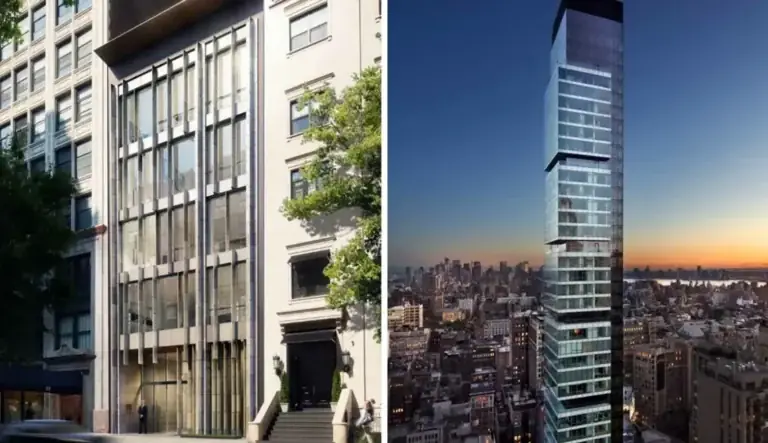
The Historic Landmark Brownstone Sanctuary
Securing restored townhouses within dense historic districts. While it offers unmatched architectural character, aging structural layouts require careful acoustic vetting.
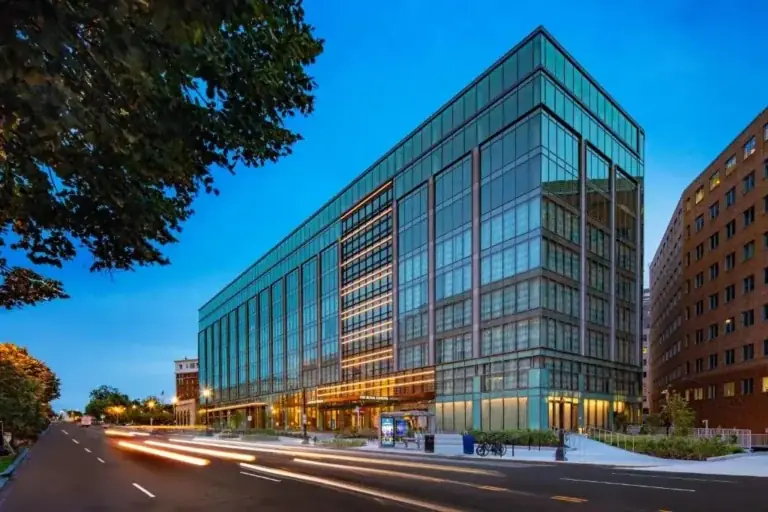
The High-Rise Glass Acoustic Fortress
Reserving upper-floor suites in modern downtown skyscrapers. Consequently, it provides expansive skyline views, offset by high reliance on complex mechanical HVAC systems.
The Courtyard Garden Urban Oasis
Booking boutique properties organized around central open-air courtyards. Although it delivers natural serenity, street-level sound bleed can affect lower-level suites.
The Industrial Loft Wellness Conversion
Utilizing repurposed manufacturing warehouses in redeveloped arts districts. While it captures rich spatial volume, heavy timber framing can transmit impact noise between floors.
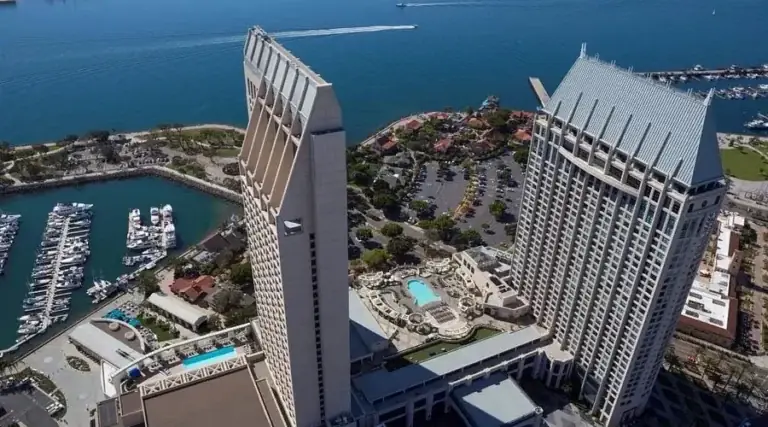
The Waterfront Metropol Sanctuary
Securing properties positioned along urban harbors or rivers. Consequently, it offers maritime tranquility, offset by exposure to commercial shipping noise.
American Urban Retreat Destinations USA Categories Comparison Matrix
| Retreat Category | Urban Setting | Core Advantage | Primary Trade-Off |
| Historic Brownstone | Restored historic districts | Architectural character | Legacy structural layouts |
| High-Rise Glass Fortress | Modern downtown towers | Expansive skyline views | Complex mechanical HVAC |
| Courtyard Garden Oasis | Boutique downtown enclaves | Natural courtyard serenity | Street-level sound bleed |
| Industrial Loft Conversion | Redeveloped arts districts | Expansive spatial volume | Inter-floor impact noise |
| Waterfront Sanctuary | Urban harbors or rivers | Maritime tranquility | Commercial shipping noise |
Realistic Decision Logic
Selecting the appropriate category requires aligning travel objectives with urban geography. Specifically, if a traveler seeks deep creative focus during a work trip, booking a courtyard garden oasis offers localized sound dampening. Conversely, if an executive requires panoramic perspective, coordinating a high-rise glass fortress with certified acoustic ratings ensures minimal disruption. Planners must evaluate assets using an operational matrix.
Detailed Real-World Scenarios
The Historic Brownstone Executive Residency
A technology founder reserved a restored brownstone suite in Boston to draft corporate strategy without distraction. By verifying interior wall insulation levels in advance, they ensured total acoustic privacy from neighboring units.
The High-Rise Glass Fortress Sound Mitigation
A finance director booked a penthouse suite in a major Manhattan tower. When construction noise began on an adjacent lot, the property deployed active white-noise systems and relocated the guest to a stack shielded from the street.
The Courtyard Garden Oasis Digital Detox
An author utilized a boutique garden suite in Charleston for a two-week writing sprint. Because the property enforced strict quiet hours around the central courtyard, external city sounds remained entirely imperceptible.
The Industrial Loft Wellness Conversion
A design consultant secured a converted loft in Chicago. Due to timber floor construction, the concierge provided specialized heavy-grade slippers and routed guest foot traffic away from sensitive recording hours.
Planning, Cost, and Resource Dynamics
The financial architecture of urban sanctuary travel involves balancing property premiums against productivity gains. Direct monetary costs manifest as acoustic engineering surcharges and central location tariffs.
Opportunity costs involve forfeiting lower-cost suburban lodging when choosing central urban retreats that require specialized soundproofing and air filtration. Planners must calculate whether cognitive restoration outweighs financial premiums.
| Expense Category | Typical Variance Range | Primary Cost Drivers | Mitigation Strategy |
| Acoustic-Certified Suites | $800 to $3,500 per night | Advanced soundproofing engineering | Book directly through corporate travel desks |
| HEPA Air Filtration Upgrades | $150 to $500 per stay | Industrial medical-grade filters | Confirm filtration specs during pre-arrival liaison |
| Boutique Advisory Retainers | $500 to $3,000 annually | Specialized urban sourcing | Consolidate metropolitan stays with one curator |
| Environmental Buffer Insurance | 3% to 8% of booking value | City disturbance underwriting | Secure urban force majeure riders |
Tools, Strategies, and Support Systems
Executing error-free bookings and securing metropolitan sanctuaries requires specialized digital platforms and professional networks.
-
Acoustic Mapping Software: Utilizing decibel-tracking databases to evaluate street noise profiles around target properties.
-
Direct General Manager Portals: Establishing direct communication channels with downtown hotel executive teams to verify insulation ratings.
-
Corporate Travel Dashboards: Deploying enterprise analytics platforms tracking urban booking compliance.
-
Real-Time Air Quality Monitors: Tracking localized particulate data to ensure interior filtration efficiency in dense cities.
-
Independent Advisory Retainers: Engaging specialized travel designers with direct knowledge of downtown architectural layouts.
-
Enterprise Expense Tools: Reconciling complex split-billing invoices where room tariffs and wellness fees are managed.
Risk Landscape and Failure Modes
Implementing careless booking practices exposes travelers to compounding vulnerabilities. Primarily, the hazard involves severe sleep disruption due to unverified street noise or inadequate window insulation.
Another critical risk category involves environmental degradation. Travelers bypassing air quality checks frequently encounter dense urban smog infiltration, compromising wellness objectives.
Governance, Maintenance, and Long-Term Adaptation
Maintaining an authoritative capability in urban sanctuary travel requires continuous portfolio surveillance and structured review cadences. As cities evolve, procurement frameworks must adapt.
-
Adjustment Triggers: Define explicit operational signals prompting a reassessment of downtown property choices.
-
Annual Travel Audits: Conduct comprehensive reviews of historical urban booking expenditures and acoustic performance.
-
Layered Compliance Checklists: Maintain internal databases tracking properties successfully delivering quiet urban environments.
Measurement, Tracking, and Evaluation
Assessing the success of metropolitan sanctuary planning requires balancing quantitative productivity metrics against qualitative rest signals.
-
Leading Indicators: Monitor pre-arrival acoustic clearance timestamps and air filtration verification reports.
-
Lagging Indicators: Analyze total trip expenditure versus sustained creative output and rest quality.
-
Qualitative Signals: Evaluate executive feedback concerning ambient silence and room comfort.
Common Misconceptions and Oversimplifications
-
Myth: Booking the most expensive suite in a downtown hotel automatically guarantees absolute silence from street traffic.
-
Correction: Penthouse suites are frequently exposed to rooftop mechanical equipment noise and helicopter flight paths.
-
-
Myth: All historic urban properties feature thick masonry walls that eliminate the need for modern soundproofing.
-
Correction: Legacy buildings often incorporate hollow interior partitions that transmit sound more readily than modern insulated drywall.
-
-
Myth: Urban air filtration systems operate uniformly across all guest floors without requiring specialized filters.
-
Correction: High-rise buildings frequently draw lower-quality air into lower levels, necessitating localized HEPA units.
-
-
Myth: Standard travel agency platforms provide accurate decibel ratings for downtown hotel rooms.
-
Correction: Online aggregators focus on surface amenities rather than engineering specifications or street orientation.
-
-
Myth: Booking during weekend periods guarantees peaceful urban sanctuary conditions without traffic interference.
-
Correction: Weekend nightlife, emergency vehicle corridors, and street cleaning operations create unique localized noise profiles.
-
Ethical, Practical, or Contextual Considerations
Engaging deeply with metropolitan sanctuary accommodations carries responsibilities regarding respectful interaction with urban hotel operators and local community standards. While corporate buyers must protect cognitive resources through diligence, unrealistic demands regarding city sound control damage professional goodwill.
Travel planners must balance travel optimization with an appreciation for urban operational realities. Ensuring procurement strategies focus on collaborative value creation fosters a sustainable approach to metropolitan travel management.
Conclusion
Mastering the execution required to secure metropolitan sanctuary accommodations demands intellectual rigor and environmental awareness. While rigorous booking practices require administrative diligence, understanding urban acoustic dynamics transforms travel planning into a strategic asset. Ultimately, balancing financial oversight secures extraordinary urban retreats while maintaining cognitive and budgetary control.