Best Downtown Five-Star Suites United States: The Definitive Guide
The vertical evolution of American urban centers has fundamentally transformed the parameters of elite hospitality. At the core of dense metropolitan grids, luxury hospitality properties redefine domestic and international transit through advanced structural acoustic shielding, vertical zoning, and personalized concierge integration. Furthermore, securing an elite suite high above a downtown corridor involves navigating complex urban densities where architectural mass, sub-grade vibration dampening, and absolute visual privacy dictate the quality of the stay.
Discerning travelers evaluating urban luxury frequently encounter marketing narratives. Specifically, promotions often equate high floor levels or floor-to-ceiling glass panes with genuine five-star distinction. However, true urban sanctuary requires rigorous evaluation. For instance, experts must assess core engineering, private elevator logistics, atmospheric air-handling purity, and spatial floor-plan intelligence. Consequently, this analysis explores the architectural, operational, and financial dimensions defining premier high-rise urban accommodations across major American metropolitan areas.
Understanding best downtown five-star suites united states
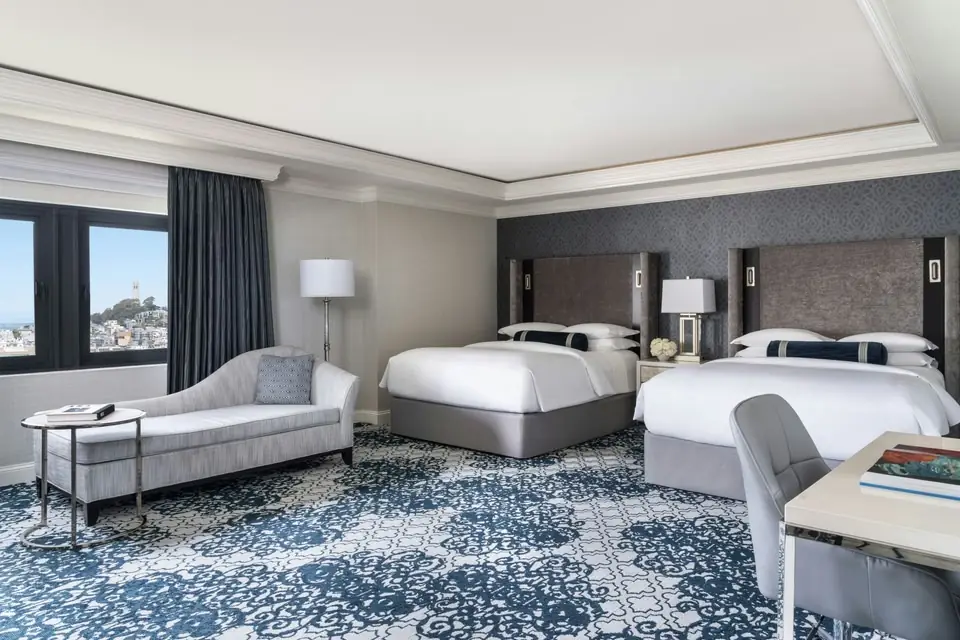
The phrase best downtown five-star suites united states represents a complex intersection of high-density real estate economics, structural engineering, and uncompromising service design. Evaluating these spaces requires untangling promotional advertising from physical realities. For example, a common misconception is that proximity to a central business district guarantees superior convenience and timeless luxury. In practice, central urban cores introduce severe environmental variables. These include persistent low-frequency traffic rumble, subterranean transit vibrations, severe wind tunnels, and light pollution. Therefore, properties must actively engineer against these factors to maintain a true five-star standard.
Oversimplification in this sector often stems from conflating brand prestige with spatial engineering. While institutional rating bodies measure tangible metrics such as staff-to-guest ratios, the structural integrity of a suite dictates its long-term comfort. Furthermore, true elite suites provide multi-zone acoustic separation between living quarters and urban thoroughfares. They also feature independent multi-stage air filtration systems and private core access that isolates occupants from general hotel foot traffic.
Another layer of complexity involves municipal zoning codes, historic preservation mandates, and strict seismic regulations. Because constructing ultra-luxury footprints within active downtown cores faces immense spatial constraints, the most prestigious suites typically occupy top-tier levels of mixed-use architectural towers. Within these spaces, structural mass and dedicated logistics elevators can be successfully integrated.
Deep Contextual Background
The evolution of downtown luxury lodging reflects broader shifts in industrial engineering, structural materials, and metropolitan economics. During the late nineteenth century, the invention of safety elevators enabled cities like Chicago to expand vertically. Initially, these early grand hotels prioritized institutional opulence. They featured heavy masonry facades and compact sleeping rooms designed around brief urban visits.
Later, post-World War II commercial expansion shifted preferences toward standardized downtown towers. However, many mid-century high-rises suffered from poor acoustic insulation and inflexible floor plans. The modern era of urban luxury subsequently emerged as structural engineers developed advanced concrete core systems, tuned mass dampers, and high-performance insulated glass units capable of creating absolute acoustic separation from the streetscape below.
By the early twenty-first century, the definition of downtown luxury matured into an emphasis on holistic wellness, biometric privacy, and biophilic integration. Properties in Manhattan, Chicago, and San Francisco began incorporating sky lobbies, private subterranean motor courts, and dedicated residential wings staffed by specialized butler brigades. Today, premier downtown suites are engineered to dissolve the barrier between interior living volumes and the dynamic city horizon.
Conceptual Frameworks and Mental Models
Evaluating premier urban accommodations benefits from structured analytical frameworks. These models isolate physical, operational, and experiential variables.
-
The Urban Acoustic Isolation Model evaluates how well a suite filters out low-frequency traffic vibrations and siren noise. High-performing properties utilize laminated acoustic glass panes to achieve near-total silence.
-
The Vertical Core Zoning Index measures the efficiency of private elevator access. True elite suites feature dedicated high-speed shuttle elevators that bypass lower-tier floors entirely, thereby eliminating wait times.
-
The Atmospheric Purity Matrix assesses mechanical air-handling capabilities. This model examines how effectively medical-grade HEPA filtration systems remove particulate matter originating from lower floors.
-
The Urban Horizon Scarcity Curve maps property valuation against municipal zoning constraints. Because prime upper-floor urban airspace is strictly finite, top-tier suites operate on inelastic supply curves.
Key Categories or Variations
Vertical luxury suites across American downtown districts span several distinct architectural and geographical typologies. Each category presents specific trade-offs regarding privacy, accessibility, and environmental exposure.
| Category | Typical Location Profile | Primary Architectural Advantage | Key Operational Trade-Off |
| Crown Penthouse Towers | Manhattan, Chicago, Los Angeles | Unobstructed 360-degree skyline views; maximum vertical distance from street-level activity. | High exposure to high-altitude wind shear; extended elevator transit times. |
| Historic Landmark Retrofits | Boston, Philadelphia, Savannah | Deep architectural character, heritage stone masonry, and storied cultural positioning. | Structural floor-to-ceiling heights can limit modern glass expansions and HVAC retrofits. |
| Mixed-Use Lifestyle Hubs | Austin, Dallas, Seattle | Integration with premium retail, cultural centers, and contemporary dining venues. | Potential friction between commercial retail foot traffic and residential or hotel entry points. |
| Waterfront Urban Towers | San Francisco, Miami, Seattle | Direct sightlines over active harbors combined with cooling maritime breezes. | Increased exposure to marine humidity, salt corrosion, and coastal wind pressures. |
| Financial District Sanctuaries | Lower Manhattan, Chicago Loop | Central proximity to corporate hubs, private clubs, and legal centers. | Lower weekend foot traffic, resulting in quieter surrounding streets but fewer neighborhood amenities open. |
Realistic Decision Logic
Selecting among these categories requires aligning personal tolerance for urban density with specific trip objectives. For instance, travelers seeking absolute architectural seclusion and dominant skyline panoramas typically favor crown penthouse towers in major financial capitals. Conversely, those prioritizing historic charm and walkable cultural access lean toward restored landmark properties. Meanwhile, waterfront urban towers serve individuals viewing dynamic harbor views as essential to their daily focus.
Detailed Real-World Scenarios
Understanding how these high-rise properties function under operational pressure requires examining specific situational archetypes. These scenarios thoroughly test suite design, spatial layout, and staff capability.
The Executive Crisis or Legal War Room
-
Operational Constraints: A professional advisory team requiring absolute digital security, uninterrupted fiber connectivity, and a secure environment for confidential strategy sessions.
-
Core Decision Points: Selecting suites featuring dedicated private meeting rooms, acoustic isolation from adjacent units, and isolated Wi-Fi networks.
-
Primary Failure Modes: Open-concept floor plans lacking acoustic doors; shared corridor chatter penetrating living areas; building-wide network bottlenecks.
-
Second-Order Effects: Securing an isolated corner suite with reinforced core walls ensures complete confidentiality without requiring off-site relocations.
The Multi-Generational Family Cultural Excursion
-
Operational Constraints: A family group requiring simultaneous connection and privacy across multiple generations, including young children and elderly members.
-
Core Decision Points: Evaluating multi-room floor plans with separated bedroom wings, dual primary bathrooms, and direct access to secure service elevators.
-
Primary Failure Modes: Inadequate soundproofing between primary bedrooms and children’s areas; complex multi-zone climate controls.
-
Second-Order Effects: Choosing a property equipped with robust multi-room layouts successfully prevents intra-family friction and reduces reliance on public amenity spaces.
The Private Entertaining and VIP Gala Hosting Suite
-
Operational Constraints: Hosting private evening receptions for twenty or more guests with professional catering support and seamless service execution.
-
Core Decision Points: Assessing great room square footage, structural floor load capacities, catering kitchen proximity, and elevator freight capacity.
-
Primary Failure Modes: Narrow entry vestibules restricting guest flow; undersized catering kitchens forcing staff to traverse living quarters.
-
Second-Order Effects: Properties accustomed to ultra-high-net-worth demands maintain dedicated residential service corridors that prevent guest disruption during major events.
The Extended Creative or Medical Residency
-
Operational Constraints: An individual undertaking an extended urban stay requiring customized air purification, private fitness integration, and absolute acoustic solitude.
-
Core Decision Points: Selecting suites with medical-grade HEPA filtration systems, dedicated wellness alcoves, and private plunge pools.
-
Primary Failure Modes: Centralized building HVAC systems introducing exterior pollutants; intrusive housekeeping schedules interrupting rest.
-
Second-Order Effects: Properties offering customizable environmental controls and flexible service protocols deliver sustainable physiological restoration over time.
Planning, Cost, and Resource Dynamics
Securing premier downtown accommodations involves navigating complex financial structures extending far beyond baseline nightly tariffs. Total cost calculations must account for seasonal rate volatility, mandatory facility fees, applicable local occupancy taxes, and service tipping protocols. Furthermore, booking channels significantly influence the inclusion of value-added perks, such as daily breakfast, spa credits, or guaranteed room upgrades.
| Expense Category | Average Baseline Range | Primary Cost Drivers & Variability |
| Nightly Suite Tariff | $1,500 to $7,000+ per night | Peak business travel seasons; floor height and view orientation; square footage and custom interior finishes. |
| Taxes, Fees & Municipal Levies | 14% to 22% of total rate | State and municipal tourism taxes; convention center district fees; energy surcharges. |
| In-Suite Dining & Beverage | $300 to $1,200+ per day | Premium pricing on private chef integration, rare wine cellars, and 24-hour butler-delivered room service. |
| Ancillary Wellness & Concierge | $400 to $1,500+ per session | Specialized in-suite spa treatments, private luxury vehicle charters, and curated cultural ticket access. |
Opportunity Cost and Financial Nuance
The primary financial consideration in this asset class involves the opportunity cost of rigid cancellation terms. Top-tier downtown suites often operate under strict cancellation windows during major convention periods. Travelers must weigh non-refundable deposits against comprehensive travel insurance options. Additionally, leveraging specialized luxury travel advisors often unlocks unlisted amenities that offset ancillary on-property expenditures.
Tools, Strategies, and Support Systems
Navigating the inventory of elite downtown suites requires systematic research tools and professional partnerships that bypass public booking engines.
-
Dedicated Luxury Travel Networks provide access to unlisted property allocations, priority waitlists, and direct communication channels with hotel managing directors.
-
Architectural Floor Plan and MEP Reviewers help examine detailed engineering blueprints to identify specific stack locations avoiding elevator shaft noise.
-
Micro-Climate and Wind Shear Trackers utilize historical meteorological data to evaluate whether a specific tower elevation experiences excessive stack-effect pressure.
-
Direct Property Management Engagement establishes communication with head concierges weeks prior to arrival to coordinate complex logistics.
-
Urban Density and Transit Mapping analyzes property locations to determine walking and vehicle transit distances to financial exchanges and cultural venues.
-
Independent Asset Audits review third-party engineering reports to verify structural resilience and acoustic dampening quality before final booking confirmation.
Risk Landscape and Failure Modes
Even the most celebrated downtown properties remain vulnerable to systemic operational failures and environmental disruptions.
-
Compounding Environmental Stressors: Extreme urban heat island effects or severe windstorms can test curtain-wall integrity and strain central building cooling loops.
-
Mechanical and Elevator Bottlenecks: Power grid fluctuations or scheduled maintenance on primary elevator banks can temporarily delay critical service deliveries during peak morning hours.
-
Acoustic and Vibration Transmission: Structural resonance from nearby subway lines or highway viaducts can introduce low-frequency hums into upper-floor suites.
-
Labor and Security Constraints: Unforeseen staffing shortages during major citywide conventions can strain butler-to-guest ratios.
Governance, Maintenance, and Long-Term Adaptation
Maintaining elite standards across urban hospitality assets requires rigorous operational governance and continuous capital expenditure. Because dense downtown environments accelerate mechanical wear and façade soiling, property management must adhere to strict maintenance cycles. Environmental exposure monitoring feeds into preventative exterior window washing and seal restoration. Furthermore, this process is followed by interior soft-goods upgrades on an 18-to-24-month cadence, backed by structural engineering audits.
This cyclical governance model ensures that high-traffic suites undergo deep restorative maintenance rather than superficial touch-ups. Regular reviews of life-safety systems, smoke evacuation fans, and backup generator readiness prevent environmental emergencies from impacting upper-floor occupants.
Measurement, Tracking, and Evaluation
Assessing the ongoing quality and operational health of a downtown suite asset involves monitoring both objective operational metrics and subjective experiential indicators.
-
Leading Indicators: Preventative maintenance ticket resolution velocity, pre-arrival preference confirmation rates, and staff retention metrics within culinary divisions.
-
Lagging Indicators: Repeat guest reservation percentages, third-party quality audit scores, and net promoter sentiment regarding elevator response times.
-
Qualitative Signals: The discretion and situational awareness of lobby security staff, the physical maintenance of exterior glass facades, and the seamless execution of private valet services.
Common Misconceptions and Oversimplifications
-
Myth: Higher elevation floors in downtown towers are universally quieter than lower floors.
Correction: Upper floors often experience higher wind turbulence and can be closer to rooftop mechanical equipment rooms, sometimes generating more ambient noise than mid-level suites.
-
Myth: Downtown luxury hotels offer identical service models regardless of their architectural style.
Correction: Historic boutique properties rely on highly personalized, intimate service brigades, whereas large mixed-use towers offer vast infrastructure but require more formalized management protocols.
-
Myth: All-inclusive pricing models cover every possible in-suite amenity without restriction.
Correction: Rare vintage wine allocations, private security details, and specialized in-suite spa treatments frequently carry significant additional surcharges.
-
Myth: Newer downtown developments always outperform historic grand hotels in guest comfort.
Correction: Historic properties often occupy irreplaceable central geographical footprints that modern zoning laws prohibit, offering unmatched proximity to cultural landmarks.
Conclusion
The selection of premier downtown accommodations requires navigating a complex intersection of structural engineering, urban geography, and operational excellence. True excellence in this domain is defined by meticulous attention to environmental shielding, acoustic isolation, and consistent service execution. By looking past surface-level marketing and evaluating properties through rigorous structural frameworks, occupants can identify authentic vertical sanctuaries offering enduring comfort and profound connection to the American metropolitan landscape.