Modern Metropolitan Lifestyle Destinations USA: The Definitive Guide
The geography of contemporary American urbanization has undergone a fundamental structural reordering. Across coastal hubs and inland growth centers alike, urban density is no longer defined merely by industrial concentration or traditional central business district workflows. Instead, modern metropolitan lifestyle destinations usa emerge from complex fusions of mixed-use real estate planning, pedestrian-oriented mobility corridors, and curated cultural programming. These nodes function as dense incubators of commerce, hospitality, and civic life, altering how populations inhabit metropolitan space.
Discerning analysts examining these urban districts frequently encounter promotional narratives that reduce complex neighborhood ecosystems to superficial lifestyle branding or simplistic retail aggregations. True metropolitan vitality, however, requires a rigorous examination of underlying infrastructural frameworks, zoning variances, transit connectivity, and long-term socio-economic resilience. Consequently, this analysis explores the architectural, economic, and operational dimensions defining the most influential urban districts across the country.
Understanding modern metropolitan lifestyle destinations usa
The phrase modern metropolitan lifestyle destinations usa represents a sophisticated intersection of urban economics, real estate development, and cultural geography. Evaluating these districts requires untangling promotional municipal marketing from structural physical realities. For instance, a common misconception is that high concentrations of retail storefronts and pedestrian plazas automatically guarantee sustainable urban vibrancy. In practice, poorly managed entertainment districts frequently suffer from economic monocultures, high tenant turnover, and severe public safety vulnerabilities during off-peak hours.
Oversimplification in this sector often stems from conflating architectural novelty with authentic community integration. While municipal planners frequently measure success through visitor volume and gross retail receipts, the true measure of a lifestyle destination lies in its operational diversity and spatial equity. Successful districts maintain a delicate balance between commercial profitability, residential permanence, and public open-access zones, ensuring that spaces remain functional across varying temporal and economic cycles.
Another layer of complexity involves municipal zoning codes, historic preservation mandates, and complex public-private partnership agreements governing American urban renewal. Because constructing or retrofitting high-density mixed-use districts requires aligning diverse stakeholder interests—including municipal authorities, private developers, and local neighborhood associations—development timelines span decades. This structural friction fundamentally shapes the spatial layout, architectural diversity, and socio-economic character of modern urban centers.
Deep Contextual Background
The evolution of American urban lifestyle districts reflects broader shifts in industrial manufacturing, post-war suburbanization, and late-twentieth-century deindustrialization. During the mid-twentieth century, many urban cores experienced severe population loss and capital flight as infrastructure investment shifted toward automobile-centric peripheral suburbs. Traditional downtowns were frequently hollowed out, leading to large-scale urban renewal projects that often fractured historic neighborhoods with multi-lane highway insertions.
By the late 1980s and 1990s, a counter-movement emerged focused on downtown revitalization through festival marketplaces, historic preservation, and urban loft conversions. This era demonstrated that urban cores could attract residents and visitors back if public safety and aesthetic conditions improved. However, early iterations often relied heavily on tourist-oriented retail chains rather than organic, mixed-use neighborhoods capable of supporting daily residential life.
In the twenty-first century, the concept matured into the contemporary mixed-use urban village model. Driven by demographic shifts toward delayed household formation, a preference for walkable environments, and the rise of the knowledge-based economy, cities began prioritizing transit-oriented development and adaptive reuse. Former warehouse districts, obsolete rail yards, and aging waterfronts were systematically transformed into high-density lifestyle hubs. Today, these areas integrate multi-family residential towers, co-working spaces, cultural institutions, and open public squares into cohesive, highly connected urban ecosystems.
Conceptual Frameworks and Mental Models
Evaluating premier urban lifestyle districts requires structured analytical frameworks that isolate physical, economic, and social variables.
-
The Mixed-Use Synergy Index evaluates the ratio of residential, commercial, and civic spaces within a half-mile radius. High-performing districts maintain balanced proportions that reduce vehicular dependency and sustain foot traffic across twenty-four-hour cycles.
-
The Pedestrian Permeability Matrix measures the density of walkable pathways, block sizes, and physical barriers across a district. Districts with fine-grained street grids facilitate continuous micro-commerce and reduce pedestrian friction.
-
The Temporal Economic Resilience Model assesses how well a district generates economic activity outside of standard 9-to-5 business hours, incorporating evening hospitality, weekend cultural events, and residential spending.
-
The Public Realm Equity Framework analyzes access to open civic spaces, parklands, and community gathering areas, ensuring that public infrastructure serves diverse socioeconomic groups rather than exclusive commercial interests.
Key Categories or Variations
Metropolitan lifestyle districts across the United States span several distinct architectural and functional typologies, each presenting specific trade-offs regarding density, economic stability, and spatial design.
| Category | Typical Location Profile | Primary Architectural Advantage | Key Operational Trade-Off |
| Adaptive Reuse Industrial Hubs | Boston, Philadelphia, Atlanta | Preserved historic brick-and-beam architecture; distinctive neighborhood character. | High structural retrofit costs and complex compliance with modern seismic and energy codes. |
| Waterfront Master-Planned Enclaves | San Francisco, Seattle, Baltimore | Prime scenic vistas, active maritime recreation, and integrated boardwalk infrastructure. | Vulnerability to sea-level rise, coastal storm surges, and strict environmental mitigation mandates. |
| Transit-Oriented Core Nodes | Chicago, Washington D.C., Denver | Direct multi-modal rail and bus connectivity, reducing reliance on private automobiles. | High land acquisition costs and complex coordination with public transportation agencies. |
| Boutique Cultural Arts Districts | Austin, Nashville, Miami | Deep integration of live music, galleries, local creative industries, and culinary arts. | Risk of rapid gentrification, displacing original creative populations and escalating commercial rents. |
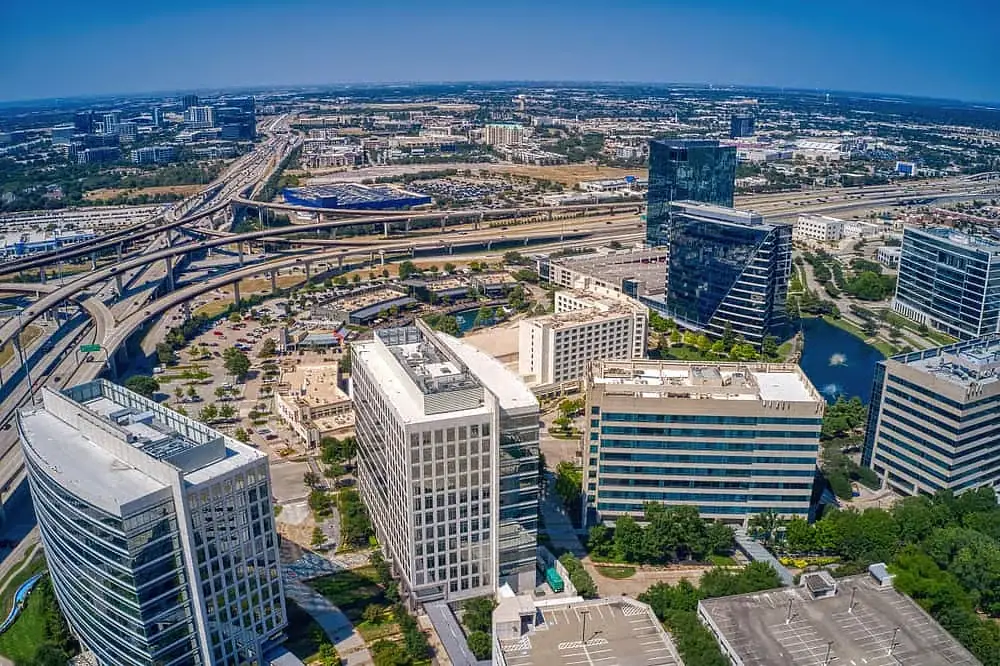
| Suburban Urbanized Town Centers | Dallas, Atlanta periphery, Orange County | Controlled pedestrian environments, abundant parking structures, and family-oriented amenities. | Often lack organic street-grid connectivity and can feel overly engineered or corporate. |
Realistic Decision Logic
Selecting among these district typologies requires aligning strategic investment or residential objectives with specific tolerance levels for density, economic volatility, and regulatory oversight. Stakeholders prioritizing authentic historic architecture and deep cultural roots typically favor adaptive reuse industrial hubs. Conversely, those seeking seamless mass-transit connectivity and predictable commercial foot traffic lean toward transit-oriented core nodes. Meanwhile, waterfront master-planned enclaves serve entities prioritizing scenic landscape integration and high-end lifestyle amenities, provided they can manage environmental exposure risks.
Detailed Real-World Scenarios
Understanding how these complex urban environments function under operational pressure requires examining specific situational archetypes that test district infrastructure, governance, and spatial design.
The Major District-Wide Public Event or Festival
-
Operational Constraints: Managing tens of thousands of visitors converging on a compact mixed-use district for a multi-day cultural festival or civic celebration.
-
Core Decision Points: Coordinating pedestrian flow corridors, deploying temporary sanitation infrastructure, and managing emergency vehicle access routes.
-
Primary Failure Modes: Chokepoints at transit stations causing severe crowd crushes; inadequate waste management leading to public sanitation breakdown; compromised fire lanes due to vendor tent placement.
-
Second-Order Effects: Establishing a dedicated district management task force with real-time communications infrastructure prevents logistical gridlock and protects local business inventory from disruption.
The Rapid Commercial Gentrification and Displacement Cycle
-
Operational Constraints: Navigating skyrocketing commercial rents that threaten to displace legacy independent merchants in favor of national corporate chains.
-
Core Decision Points: Implementing community land trusts, establishing commercial rent stabilization zones, and partnering with local business improvement districts.
-
Primary Failure Modes: Loss of cultural authenticity leading to visitor fatigue; severe community backlash against municipal planning boards.
-
Second-Order Effects: Maintaining a balanced tenant mix through structured retail leasing policies preserves the distinct neighborhood identity required for long-term economic sustainability.
The Major Infrastructure or Transit Disruption
-
Operational Constraints: Managing a multi-month shutdown of a primary heavy-rail transit line or highway corridor servicing the lifestyle district.
-
Core Decision Points: Deploying supplemental micro-mobility fleets, rerouting bus shuttle networks, and offering temporary commercial tax relief for affected retailers.
-
Primary Failure Modes: Sudden drop in visitor foot traffic causing severe cash-flow crises for independent hospitality and retail tenants.
-
Second-Order Effects: Agile district governance that rapidly reallocates public space for outdoor dining and local foot traffic helps cushion local merchants against sudden transit shocks.
The Climate Resilience and Severe Weather Retrofit
-
Operational Constraints: Upgrading district-wide stormwater management and energy microgrids to withstand extreme precipitation and urban heat island effects.
-
Core Decision Points: Installing permeable pavement systems, expanding urban tree canopies, and burying overhead utility lines.
-
Primary Failure Modes: Disruption of commercial activity during lengthy construction phases; budget overruns in complex subterranean utility relocations.
-
Second-Order Effects: Proactive climate engineering significantly reduces long-term property damage risks and enhances the district’s appeal to risk-conscious institutional investors.
Planning, Cost, and Resource Dynamics
Developing and maintaining premier metropolitan lifestyle destinations involves navigating intricate financial structures extending far beyond initial real estate acquisition costs. Total economic calculations must account for infrastructure installation, ongoing public realm maintenance, municipal tax increment financing structures, and marketing levies managed by business improvement districts.
| Expense Category | Average Baseline Range | Primary Cost Drivers & Variability |
| District Infrastructure & Hardscaping | $10M to $100M+ per phase | Underground utility relocation, premium street furniture, public art installations, and paving materials. |
| Public Realm Maintenance & Security | $1M to $5M+ annually | Sanitation services, private security patrols, landscape upkeep, and seasonal event production. |
| Commercial Leasing & Tenant Acquisition | $40 to $120+ per sq. ft. | Prime ground-floor retail frontage, tenant improvement allowances, and location visibility. |
| Municipal Fees & Special Assessments | 1% to 4% of assessed value | Business improvement district (BID) levies, tax increment financing (TIF) contributions, and permitting fees. |
Opportunity Cost and Financial Nuance
The primary financial consideration in district-level development involves the opportunity cost of rigid zoning restrictions versus flexible mixed-use designations. Restrictive zoning can stifle organic neighborhood evolution, while overly permissive development can destroy historical character and community cohesion. Investors must weigh short-term capital returns against the long-term value preservation inherent in thoughtfully governed, resilient urban ecosystems.
Tools, Strategies, and Support Systems
Managing and evaluating the health of complex urban lifestyle districts requires sophisticated analytical tools and professional governance structures.
-
Geographic Information Systems (GIS) Spatial Mapping tracks pedestrian foot traffic patterns, commercial vacancy rates, and transit usage metrics across micro-zones.
-
Business Improvement District (BID) Management Associations coordinate private stakeholder funding to maintain clean streets, execute marketing campaigns, and provide supplementary security.
-
Urban Micro-Climate Sensors monitor air quality, urban heat island intensity, and stormwater drainage efficiency in real time.
-
Public-Private Partnership (P3) Legal Frameworks establish clear operational boundaries and financial responsibilities between municipal governments and master developers.
-
Community Engagement Platforms facilitate structured dialogue between developers, local residents, and business owners during planning phases.
-
Economic Impact Modeling Software projects the direct, indirect, and induced financial benefits of proposed cultural events and retail mix adjustments.
Risk Landscape and Failure Modes
Even the most celebrated metropolitan lifestyle destinations remain vulnerable to systemic economic shifts, environmental hazards, and governance failures.
-
Economic Monoculture Vulnerability: Over-reliance on a single industry—such as tech office workers or tourism—can trigger rapid district-wide decline during economic downturns.
-
Public Safety and Perception Deficits: Unmanaged public disorder or property crime can severely damage district reputation, leading to immediate declines in evening foot traffic.
-
Infrastructure Obsolescence: Aging underground utility networks, outdated telecommunications fiber, and inadequate stormwater capacity can cause catastrophic service interruptions.
-
Governance Fragmentation: Lack of coordination between multiple property owners, municipal agencies, and merchant associations can result in blighted public corridors and inconsistent maintenance.
Governance, Maintenance, and Long-Term Adaptation
Maintaining elite standards across urban lifestyle destinations requires rigorous operational governance and continuous capital expenditure. Because high-density pedestrian zones accelerate physical wear and tear, district management entities must adhere to strict maintenance cycles. Routine pavement power-washing, landscape renewal, and street furniture restoration must be scheduled on predictable cadences backed by dedicated reserve funds.
This cyclical governance model ensures that public-facing infrastructure undergoes deep restorative maintenance rather than reactive patching. Regular reviews of life-safety systems, lighting illumination levels, and waste management capacity prevent urban decay from eroding the district’s long-term commercial value.
Measurement, Tracking, and Evaluation
Assessing the ongoing economic health and spatial quality of a metropolitan lifestyle district involves monitoring both objective operational metrics and subjective experiential indicators.
-
Leading Indicators: Retail lease inquiry velocity, pedestrian sensor counts during shoulder hours, and private capital investment commitments within the district boundary.
-
Lagging Indicators: Tax revenue generation rates, commercial vacancy percentages, and long-term property value appreciation relative to the broader metropolitan region.
-
Qualitative Signals: The perceived cleanliness of public spaces, the diversity of independent merchant offerings, and the active engagement of diverse community groups in public squares.
Common Misconceptions and Oversimplifications
-
Myth: Simply adding luxury residential towers to an urban core guarantees a vibrant lifestyle district. Correction: Residential density without integrated ground-floor retail, cultural programming, and public open space creates sterile, lifeless environments.
-
Myth: Pedestrianized retail streets automatically succeed without vehicular delivery access. Correction: Successful districts require carefully engineered delivery logistics and service corridors to support high-turnover hospitality and retail operations.
-
Myth: Historic industrial districts cannot be successfully adapted into modern lifestyle destinations. Correction: Many of the nation’s most successful urban nodes utilize historic brick-and-beam architecture to provide unmatched character and spatial differentiation.
-
Myth: Municipal governments alone can manage the complex operational needs of major urban lifestyle centers. Correction: Long-term success typically depends on collaborative public-private partnerships, such as business improvement districts, that leverage private sector agility.
Conclusion
The evolution and management of modern metropolitan lifestyle destinations usa require a delicate synthesis of structural engineering, economic realism, and human-centric urban design. True vitality in these districts is sustained by balancing commercial enterprise with public equity, acoustic comfort, and resilient infrastructure. By looking past surface-level marketing and evaluating urban nodes through rigorous analytical frameworks, planners, investors, and residents can foster enduringly vibrant, adaptable metropolitan communities.